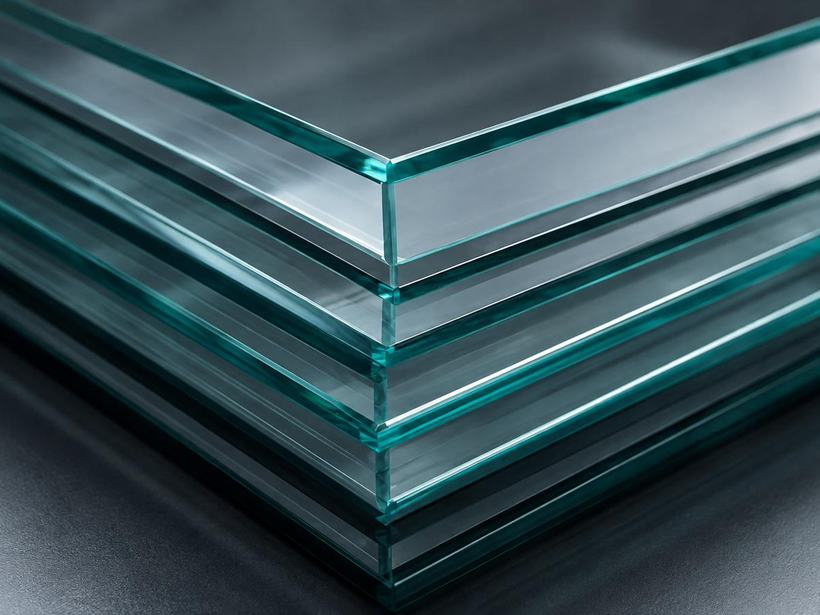
Low-iron glass with the green edge cast removed, for thick or layered applications.
Standard float glass carries a faint green cast from iron in the raw batch – invisible face-on, obvious at the edge and across thick or stacked panes. Low-iron glass removes most of it, which matters wherever the glass is thick, layered, or sitting next to a finish that has to read true.
Where it is used
Low-iron glass, usually specified where the edge is exposed or where colour accuracy matters – frameless balustrades, display cases, shopfronts, feature joinery and thick or layered build-ups.
In a standard window it is rarely worth the premium. The difference shows most on exposed edges and in thicker sections.
What the specification depends on
Whether the edge is visible
On a frameless balustrade or a display unit the exposed edge is the whole argument for low-iron: standard float reads green there, low-iron reads clean.
Thickness of the build-up
The thicker the glass or the more layers in a laminate, the more the iron content shows. Low-iron is specified more often in thick sections for that reason.
Colour accuracy behind the glass
Where the glass sits in front of a finish, a product or artwork, the tint shifts what is behind it. Low-iron minimises that shift.
What we need to quote
Glass type and build-up, or the performance requirement
Pane sizes and quantities
Edge finish required
Hole positions, cut-outs and notches, with edge distances
The application – façade, partition, balustrade, overhead or internal
Whether dimensions are surveyed or still nominal
Any certification or documentation the project requires
Thicknesses, maximum pane sizes and build-ups vary by product and processor, and are confirmed against the project requirement at quotation.
Specification noteLow-iron glass carries a cost premium over standard float. We are happy to advise where it earns that premium on a given project and where it does not.
Common questions
What information do you need to quote glass?
The glass type or the performance requirement, pane sizes and quantities, edge finish, any holes or cut-outs with their positions, and the application. Tell us which dimensions are surveyed and which are still nominal – that lets the confirmed items be sequenced while the rest are held.
Can glass be cut or drilled after toughening?
No. Once glass is toughened it cannot be cut, drilled or notched – the attempt shatters the pane. Every hole, cut-out and edge finish must be on the schedule before the glass goes through the furnace.
Can you supply documentation for the glass?
Technical datasheets and manufacturer documentation can normally be requested for the product supplied. Tell us at enquiry stage if the project, consultant or import process requires specific documents.
Related
More from Glass Products
01
Clear Float Glass
The standard flat glass most other architectural glass is processed from.