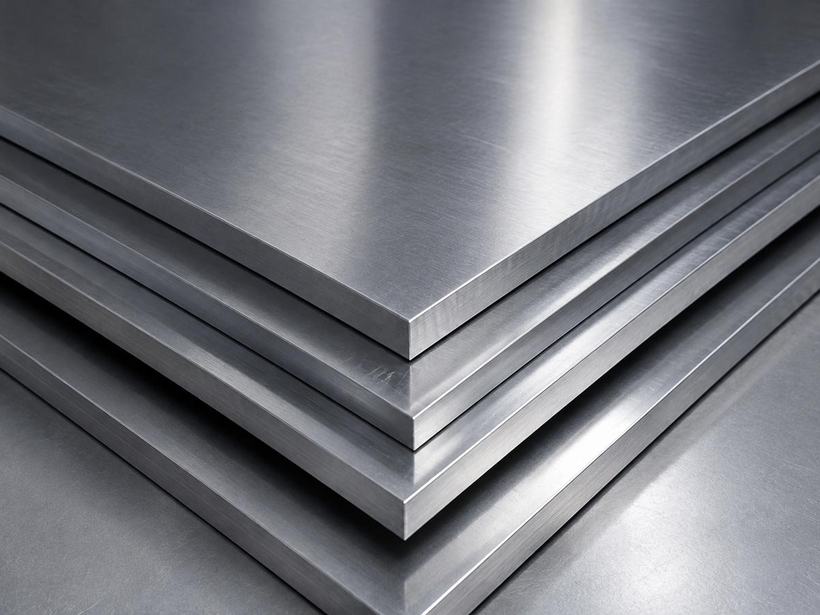
Untreated as-rolled sheet – the economical choice where the surface will be coated or concealed.
Mill finish is aluminium as it leaves the rolling mill – untreated, matt grey, with the natural oxide layer already forming on the surface. It is the most economical form of sheet and the usual starting point where the material will be coated, concealed or used somewhere appearance is not the priority.
Specifications commonly available
Specification
Commonly available
Material
Aluminium
Thickness
Sheet commonly from approximately 0.5 mm to 6 mm
Common sizes
1000 × 2000 mm · 1250 × 2500 mm · 1500 × 3000 mm, among others
Alloy families
1xxx · 3xxx · 5xxx, and selected 6xxx for structural work
Common tempers
O · H14 · H24, and others depending on alloy and product
Commonly produced to EN 485 or ASTM B209, depending on product and supplier
Mill finish is the surface as the material leaves the rolling mill – untreated, with minor marking normal. It is the economical choice where the surface will be coated, wrapped or hidden.
The combinations above describe what the market commonly produces. Final alloy, temper, thickness, size and finish are confirmed against the project requirement at quotation.
Alloy and temper for mill finish sheet
Mill finish is supplied across all the common alloy families, so the alloy choice matters more here than on any decorative finish. For general fabrication, flashings and trims, 1050 or 3003 in H14 is the usual starting point. For cladding and formed panels that need more stiffness, 3003 or 3105 in H14 or H24. Where the sheet will face coastal exposure or needs higher strength, a 5xxx alloy such as 5052 or 5754.
Expect a matt, slightly variable grey with light rolling lines and occasional handling marks. Sheets from different coils or different mills can differ in tone. That is normal and does not affect performance, but it matters if the sheet will be left exposed – in that case ask for material from one batch, or choose a brushed or coated finish instead.
Mill finish as a substrate
Most mill finish sheet is an intermediate product: it goes on to be powder coated, anodised, laminated or bonded. If the sheet will be anodised, say so at enquiry – anodising needs anodising-quality material, commonly 5005 or 1050, and general-purpose sheet does not always anodise evenly. Powder coating and wet paint need the surface pre-treated by the coater, so tell us which process follows and we will source material that suits it.
What we need to quote
Alloy and temper, or a description of the application
Thickness, with tolerance if it is critical
Sheet size or cut sizes, and quantity
Required finish
Whether forming, machining or coating follows
Delivery location, or port and destination for export
Any certificate the project requires
Mill finish is sourced by alloy, temper and gauge rather than from a fixed stock range.
These products are supplied for UAE projects and quoted for export enquiries, subject to specification, quantity and destination.
Specification noteMill finish surfaces will show handling marks. Where a visible finish is required, a polished, brushed or pre-coated sheet is normally specified.
Common questions
Is mill finish aluminium protected against corrosion?
Aluminium forms a thin natural oxide layer in air, which gives mill finish sheet good general corrosion resistance. In coastal or industrial atmospheres the surface will dull and can show white oxidation over time. Where appearance matters outdoors, specify a coating or anodising, or a 5xxx alloy.
Can mill finish sheet be anodised or powder coated later?
Yes – that is what most mill finish sheet is bought for. Tell us which process follows. Anodising in particular needs anodising-quality material, otherwise the finished colour can be streaky or uneven.
Why do mill finish sheets vary in colour?
Mill finish is an untreated surface, so small differences in alloy, rolling and storage show as differences in tone. If the sheets will be seen side by side, order them from one batch or choose a finished surface.
What do you need to quote mill finish sheet?
The alloy and temper, or a description of the application; thickness; sheet size or a cutting list; quantity; any process that follows; and the delivery location or export destination. If the project needs a mill test certificate, say so with the enquiry.
Related
More from Aluminium Sheets & Plates
02
Polished Sheets
Bright reflective surface for interior feature and display work.