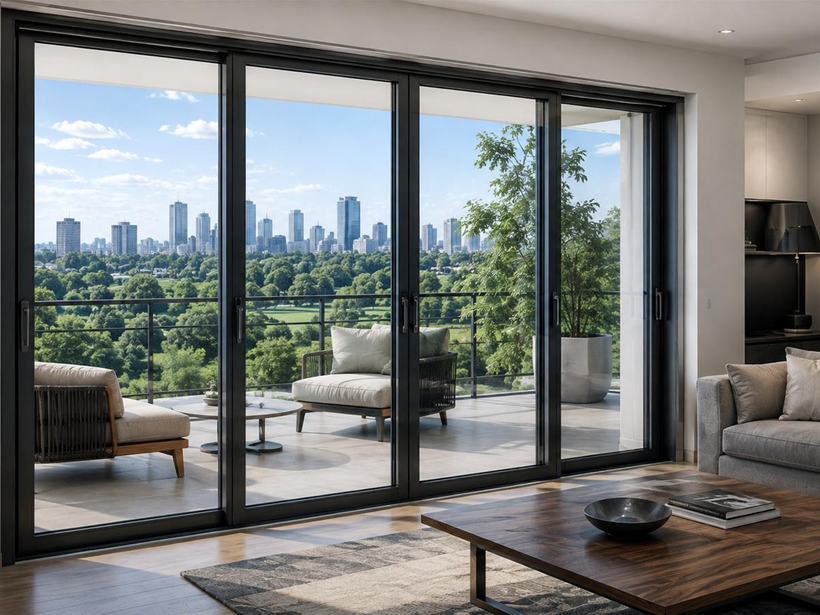
Factory-coated aluminium in RAL colours, for external frames and architectural metalwork.
Powder coating bonds a dry finish to the aluminium under heat, producing a harder, more uniform surface than wet paint and one that holds colour under strong UV. For external architectural work in the Gulf, that durability is the point.
Specifications commonly available
Specification
Commonly available
Material
Extruded aluminium
Alloy
6063 is the usual architectural extrusion alloy; 6061 where the section is structural
Temper
Commonly T5 or T6, depending on the section and application
Finish
Mill · anodised · powder coated
Colour
Powder coating commonly referenced to RAL
Lengths
Commonly supplied around 6 m, and cut to length on request
Coating
Polyester powder coating, commonly to a RAL reference
Powder coated sections arrive finished, which removes a coating stage from the programme and gives a more consistent colour than site application.
Section dimensions, chamber depths and system performance are specific to each profile system and are confirmed against the system selected for the project.
Choosing the finish
Mill finish
The section as extruded, untreated. Suitable where the profile is hidden or will be coated later. Not for exposed exterior use.
Anodised
An electrochemical finish that becomes part of the surface rather than sitting on it. Hard-wearing and keeps a metallic appearance. Colour range is narrower than powder coating, and matching anodised batches is harder.
Powder coated
A cured polyester coating, usually specified to a RAL reference. Wide colour range and good consistency, provided the whole elevation comes from one batch.
Batch matching is the thing to watch
Powder coating is matched by production batch. An elevation completed from two batches can read as two slightly different colours in raking light, and there is no practical fix once it is installed.
Order the whole visible run together where you can, and tell us if a later phase has to match an existing elevation – that changes how we source it.
What we need to quote
Profile or system type, with a drawing or section reference if available
Alloy and finish required
RAL reference if powder coated
Total lengths or piece quantities
Cut lengths, if cutting to a schedule helps
Delivery location, or port and destination for export
Specification noteWhere colour consistency across phases matters, we recommend confirming batch requirements at order stage. Colour references are matched against the architect's specification.
Common questions
Which aluminium alloy are architectural profiles made from?
6063 is the usual choice for architectural extrusions – it extrudes into complex sections cleanly and takes anodising and powder coating well. 6061 is specified where the section carries more load. The right alloy follows from what the profile has to do.
What is the difference between anodised and powder coated?
Anodising converts the surface itself, so it is hard-wearing and keeps a metallic look, but the colour range is narrower. Powder coating applies a cured finish over the section, giving a far wider colour range, usually specified to a RAL reference. For colour matching across a façade, powder coating is more predictable – provided the whole run comes from one batch.
What lengths are profiles supplied in?
Around 6 m is the common supply length, and sections can be cut to length. Tell us if cutting to a schedule would save you handling and offcut.
What do you need to quote profiles?
The profile or system type, a drawing or section reference if you have one, the alloy and finish required, the RAL reference if powder coated, total length or piece quantities, and the delivery location.
Related
More from Aluminium Products
01
Aluminium Sliding Doors
Large glazed openings on a rolling track, for balconies, terraces and retail frontages.