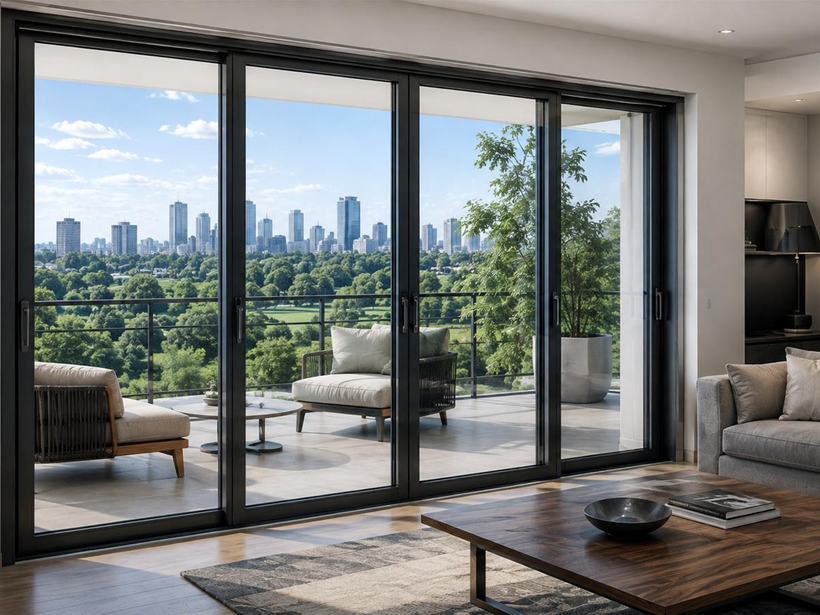
Profiles extruded to your own section drawing, from a new die where no standard section fits.
When no standard section does the job, the answer is a new die. Send the section drawing – or a sample, or a sketch with the critical dimensions – and we will have it reviewed for extrudability, quote the die and the extrusion, and supply the profile in the finish you need. The same route covers replacement sections for older systems that are no longer produced, and profiles for products that are not architectural at all: frames, enclosures, furniture, display systems, solar mounting and machine guarding.
Specifications commonly available
Specification
Commonly available
Material
Extruded aluminium
Alloy
6063 for most architectural and general sections; 6061 or 6082 where the section is structural
Temper
Commonly T5 or T6, depending on alloy and application
Section types
Solid, semi-hollow and hollow sections · tubes · angles · channels · T and I sections · multi-chamber profiles
Section size
Limited by the extrusion press; the governing measure is the circumscribing circle – the smallest circle that encloses the section
Wall thickness
Commonly from around 1 mm on small sections, increasing with section size
Tolerances
Commonly to EN 755-9, or EN 12020-2 for precision profiles in 6060/6063
Finishes
Mill · anodised · powder coated · wood-grain effect, depending on the finishing line
Lengths
Commonly around 6 m, and cut to length on request
The figures above describe what extruders commonly produce. Achievable sizes, wall thicknesses and tolerances depend on the press and the section, and are confirmed against your drawing at quotation.
How a custom die project runs
1. Drawing review
The section is checked for extrudability: wall-thickness ratios, deep or narrow channels, hollow features and the tolerances marked on the drawing. Where a small change makes the section extrude more reliably without changing what it does, we will suggest it before the die is cut.
2. Die quotation
A new die is a one-off cost, quoted separately from the extrusion. The terms – who pays for the die and how it is reserved for your profile – are agreed in writing before it is made.
3. Trial and approval
The first extrusion from the new die is measured against the drawing, and samples can be sent for your approval before production runs.
4. Production and finishing
Once approved, the profile is extruded, finished – mill, anodised or powder coated – cut to length if required, and packed for delivery in the UAE or for export.
Designing a section that extrudes well
Most problems on custom profiles start in the drawing. Keep wall thickness as even as the design allows, because thick and thin walls next to each other cool at different rates and distort. Put a small radius on internal corners rather than a sharp edge. Avoid deep, narrow channels, which weaken the die. Mark only the dimensions that are genuinely critical with tight tolerances – every tight tolerance adds cost and inspection time.
Quantities
Because the die is a one-off cost, custom profiles make most sense on repeat or volume requirements. Minimum order quantities are set per section and per finish, usually by weight. Tell us the expected annual volume as well as the first order, so the die and the price can be quoted on the right basis.
What we need to quote
Section drawing – DWG or DXF preferred, PDF accepted – or a sample
Critical dimensions and tolerances
Alloy and temper, or what the profile has to do
Finish, and colour reference if coated
Lengths, and cut lengths if required
First order quantity and expected annual volume
Delivery location, or port and destination for export
Specification noteCustom sections are quoted against the drawing supplied. Die terms, sample approval and minimum quantities are confirmed in writing before the die is made.
Common questions
Can you make aluminium profiles to my own drawing?
Yes. Send the section drawing and we will review it, quote a new die and the extrusion, and supply the profile in the finish you need. A sample or a dimensioned sketch is also a workable starting point.
Who owns a custom extrusion die?
The terms are agreed in writing before the die is made – including who pays for it and how it is reserved for your profile. Ask at quotation stage so there is no ambiguity later.
How long does a new extrusion die take?
Die manufacture and the first trial extrusion usually take a few weeks. The lead time for the die and for the first production run is confirmed with the quotation.
Can you match an existing profile from a sample?
Usually. A sample section can be measured and redrawn for your approval, which is the normal route for replacement profiles on older systems that are no longer produced.
Which alloy should a custom profile be made in?
6063 suits most architectural and general sections because it extrudes cleanly and takes anodising and powder coating well. 6061 or 6082 is specified where the section carries structural load.
Do you export custom aluminium profiles?
Yes. Custom and standard profiles are quoted for export to the GCC, North Africa, the United Kingdom and selected European markets. See export supply.
Related
More from Aluminium Products
01
Aluminium Sliding Doors
Large glazed openings on a rolling track, for balconies, terraces and retail frontages.